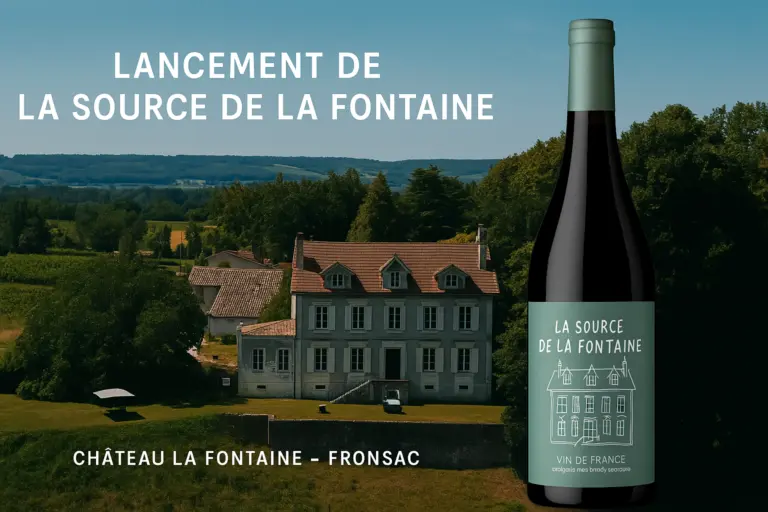
Château La Fontaine is among the addresses selected by Lonely Planet, the world’s leading travel guide publisher, in the new edition of its Bordeaux, Gironde and Landes guide, Explore the Region, 2026-2027 vintage. The estate’s two 4-star gîtes and four guest rooms, in Fronsac (33126), are presented there as a base from which to explore the Libournais vineyards and the Dordogne valley.
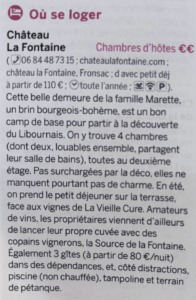
In its accommodation section, Lonely Planet gives Château La Fontaine a detailed write-up. The guide places the estate in Fronsac and describes it as the Marette family home, with a character that is both elegant and relaxed, which it calls “bourgeois-bohemian”. For its authors, the property makes a good base from which to discover the Libournais.
The guide details the accommodation as it stands today: four rooms, all on the second floor of the château, two of them interconnecting and sharing a bathroom.
It notes a deliberately understated, uncluttered décor that does not stop the rooms from having plenty of charm. It also mentions the pleasure of having breakfast on the terrace in summer, facing the vines of Château La Vieille Cure, a neighbouring property.
Wine lovers themselves, the owners are highlighted for having recently launched their own cuvée in partnership with other winemakers in the region, La Source de la Fontaine. Finally, the guide mentions the estate’s three gîtes, set in the outbuildings and available from 80 euros a night, as well as the facilities on site: wifi and parking, for a stay open all year round. For entertainment, a trampoline and a pétanque court complete the picture, while the guest rooms are offered with breakfast from 110 euros. One small mistake: the pool is in fact heated so that it can open from early April to the end of October.
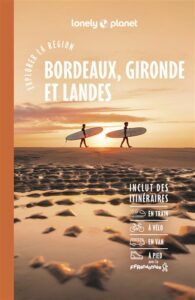
The Lonely Planet guide covers the whole Gironde and Landes region: the historic centre of Bordeaux, the Bordeaux vineyards, the Dune du Pilat, and the great wine terroirs of the Libournais, including Saint-Émilion, a UNESCO World Heritage Site. Château La Fontaine’s inclusion in this edition places the Fronsadais alongside these sites among the best-known of the Bordeaux, Gironde and Landes destination.
This area, often described as the gateway to the Libournais, remains less trodden than its neighbours Saint-Émilion and Pomerol. The Tertre de Fronsac, which overlooks the confluence of the Isle and the Dordogne, offers a view over miles of vineyard slopes and underground galleries carved into the local limestone, the same bedrock that shapes the Fronsac appellation.
The 2026-2027 edition of the guide highlights itineraries designed for multi-day stays: cycling routes between the Gironde estuary and the ocean, suggestions for extended car-free weekends, and must-sees to spread across the whole region. The Fronsadais lends itself particularly well to this kind of base: less than thirty minutes from Bordeaux, Blaye and Saint-Émilion, three UNESCO-listed sites, it lets you head out each day to a different part of the vineyard without changing where you stay.
This is the role Château La Fontaine has played for several years, welcoming travellers who settle in to explore the region at their own pace: hiking on the hillsides, visits to wine châteaux open to the public, tastings along the wine route of Saint-Émilion, Pomerol and Fronsac, or simply a break by the pool between visits. The estate also produces its own biodynamic wine, La Source de la Fontaine, offered by Émilie and Nicolas, a way of extending the discovery of the terroir right into your glass.
For a group, an extended family or a corporate seminar, exclusive use of the estate for up to 24 guests lets you enjoy this stay together, without ever leaving the property.
At a time when more and more travellers build their itineraries from cross-referenced guidebook recommendations and search tools, this Lonely Planet selection adds to the resources available for planning a visit to the Fronsadais, alongside the Fronsadais Tourist Office and the Libournais Tourist Office. It confirms a region in its own right within the Bordeaux vineyards, best explored over several days rather than as a mere stopover.